Summary:
Most people researching ash scattering at sea aren’t doing it out of curiosity. They’re doing it because someone they loved has died, or because someone they love has made a wish they want to honor — and now they’re trying to figure out what that actually involves.
The good news is that the process is more straightforward than most families expect. The legal requirements are clear, the ceremony itself can be as personal or as simple as you want, and the experience — when it’s done right — tends to stay with people in a way that few other memorial services do.
Here’s what you need to know, from the regulations to the ceremony itself to what makes a sea scattering feel genuinely meaningful rather than just logistically complete.
What Is an Ash Scattering Ceremony at Sea?
An ash scattering ceremony at sea is exactly what it sounds like: cremated remains are brought aboard a vessel, carried at least three nautical miles offshore, and released into the ocean — usually accompanied by readings, music, flowers, and whatever personal touches the family chooses to include.
It’s a fully structured memorial service, not an informal gesture. Families typically gather on the boat, the captain leads the vessel out to open water, and the ceremony unfolds much like any other memorial — with the ocean as the setting. Some families bring a priest. Some bring catering and spend a couple of hours on the water together. Some keep it quiet and simple. The format is yours to decide.
What draws people to it, beyond any practical consideration, is the sense of return — the idea that the ocean is vast, timeless, and indifferent to grief in the best possible way. It offers a kind of closure that a room with folding chairs rarely can.
Is It Legal to Scatter Ashes at Sea in Nassau County?
Yes — and the rules are simpler than most people expect. Ash scattering at sea in U.S. ocean waters is governed by the EPA under the Marine Protection, Research, and Sanctuaries Act (MPRSA). There are four core requirements, and they apply whether you’re off the coast of Nassau County or anywhere else along the Atlantic.
The remains must be scattered at least three nautical miles from shore — roughly three and a half statute miles. Only biodegradable materials may be released into the water, so flowers, wreaths, and biodegradable urns are fine, but nothing plastic, synthetic, or metal. The scattering must be reported to the EPA within 30 days after the ceremony through their online reporting form. And the ceremony must take place in ocean waters — not bays, inlets, or inland waterways.
That last point matters for Nassau County families in particular. The Great South Bay, which runs between the South Shore and the barrier islands, is not ocean water. The ceremony needs to take place in open Atlantic waters, which means a vessel has to navigate out past the barrier islands to reach the required distance from shore. That’s standard for any reputable provider operating out of Freeport — it’s built into how the service works.
You do not need to apply for a permit in advance. Ash scattering at sea operates under a federal general permit, meaning there’s no application process before the ceremony. The only post-ceremony obligation is the EPA notification within 30 days, which we handle on your behalf.
The vessel you use does matter legally. Any boat carrying passengers for a memorial service needs to be U.S. Coast Guard-inspected and certified. This isn’t a technicality — it’s the clearest way to know you’re working with a legitimate, safety-compliant operator rather than someone with a recreational boat and good intentions.
What Happens During a Sea Scattering Ceremony, Step by Step
Most families have never attended a sea burial before, and the uncertainty about what the day actually looks and feels like is often what keeps them from moving forward. Here’s a straightforward picture of how it typically goes.
You arrive at the marina and board the vessel. The captain gives a brief safety overview, and the boat departs. The journey out to open water — at least three nautical miles from shore — takes anywhere from 20 to 40 minutes depending on conditions and departure point. For families leaving from Freeport, that means heading south through the inlet and out into the Atlantic off Point Lookout, which is the southwestern tip of Jones Beach Island. It’s a stretch of coastline that South Shore Nassau County residents know well, and seeing it from the water is a different experience entirely.
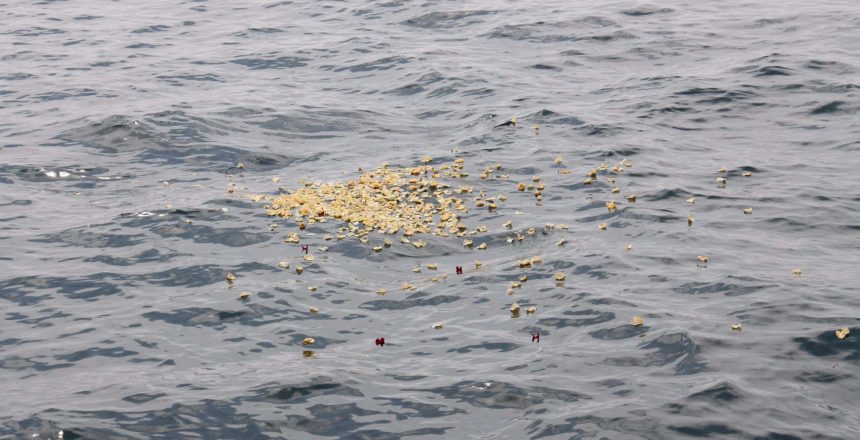
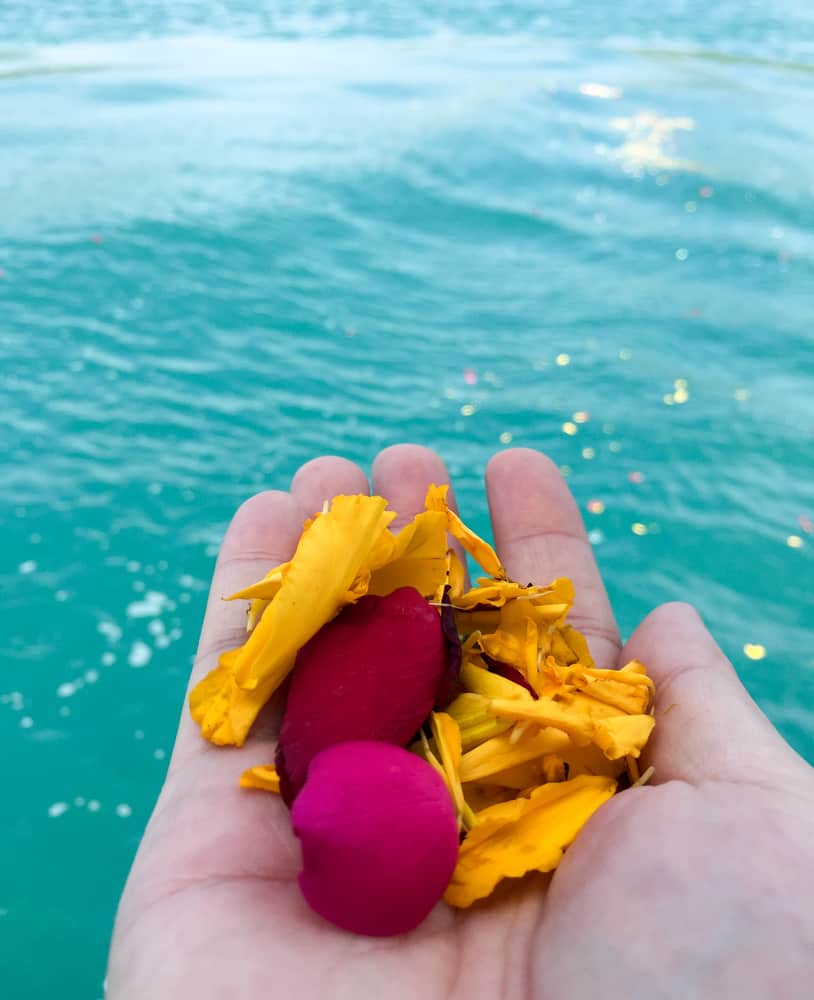
Once the vessel reaches the designated area, the ceremony begins. Readings, prayers, or a moment of silence — whatever the family has planned. Music, if you’ve arranged it. A priest, if that’s important to your family. Then the ashes are released into the water, downwind, so they scatter away from the vessel and the guests. Biodegradable flowers or wreaths can be released at the same moment if you choose. The captain records the GPS coordinates of the exact location.
After the scattering, there’s usually a period of quiet — time to just be on the water together before the boat turns back. Families who have arranged catering can share a meal on the return. The whole experience, dock to dock, typically runs around an hour and a half to two hours.
After the ceremony, you receive a certificate of scattering with the GPS coordinates, the date, and your loved one’s name. It’s a small thing, but families consistently say it matters — having a specific place to return to in memory, even if only in their minds.
Preparing Cremation Ashes for a Sea Ceremony
There’s not much you need to do to prepare cremated remains for a sea scattering, but a few practical details are worth knowing before the day arrives.
Cremated remains — sometimes called cremains — are typically returned from the crematorium in a sealed plastic bag inside a temporary container or urn. For a sea ceremony, you have a couple of options. You can transfer the ashes into a biodegradable urn designed to be released into the water, which will dissolve over time. Or you can scatter them directly from the bag or a vessel-provided container. We’ll walk you through whichever approach works best for your ceremony.
What you should not bring: anything non-biodegradable. No plastic bags, no synthetic flower arrangements, no metal objects. EPA regulations are clear on this, and we’ll remind you well before the day.
What to Bring to an Ash Scattering Ceremony on the Water
Dressing for the weather is more important than most people realize when they’re planning a sea ceremony for the first time. Even on a warm day, the ocean breeze a few miles offshore can feel significantly colder than it does on land. Layers are always a good idea. In fall or winter, dress as if the temperature is ten degrees lower than the forecast — because on the water, it often is.
Seasickness is a real concern for some guests, especially children and those who don’t spend much time on boats. Over-the-counter motion sickness medication taken the night before and the morning of the ceremony is the most effective prevention. Ginger chews and wristbands can help as well. Let us know if any guests have significant concerns — we can suggest the calmest departure time based on expected conditions.
The death certificate or documentation for the deceased may be required depending on your situation. We’ll tell you exactly what paperwork we need and when, so you’re not scrambling on the day.
If you’ve planned readings or want to say a few words, bring printed notes rather than relying on your phone. Wind and emotion both have a way of making screens harder to manage than you’d expect. If you want music played during the ceremony, coordinate with us ahead of time — our vessels can accommodate a playlist, and having it organized in advance removes one more thing to think about on the day itself.
One detail that surprises families: the physical act of releasing the ashes. It’s more significant than most people anticipate. Having a vessel that sits low in the water makes a real difference — it allows every family member, including elderly guests or those with limited mobility, to participate directly in the release rather than watching from a distance. That’s a small thing that turns out to matter quite a lot.
Burial of Ashes at Sea: Attended vs. Unattended — Which Is Right for Your Family?
Not every family can be there in person. Geographic distance, health limitations, or the simple reality that grief doesn’t always cooperate with logistics — there are plenty of reasons a family might choose an unattended scattering, where our crew carries out the ceremony on the family’s behalf without guests aboard.
An unattended burial of ashes at sea is a legitimate and dignified option, and it’s more common than many people assume. The ceremony is still conducted with care and intention. Afterward, the family receives documentation of the scattering — GPS coordinates, the date, and a certificate confirming the details. For families who live outside of Nassau County, or who have elderly members who cannot travel, or who simply need the ceremony to happen before everyone can gather, it provides a real solution without sacrificing the meaning of the act.
The attended option, on the other hand, is what most people picture when they think about a sea scattering ceremony. The family gathers on the vessel, travels out to open water together, and participates directly in the release. There’s something irreplaceable about being present — about watching the ashes meet the water, about standing together in that moment. Families who choose this consistently describe it as one of the most profound experiences they’ve shared.
For Nassau County families, the logistics of an attended ceremony are genuinely manageable. Departing from Freeport’s marina — just off Sunrise Highway and easily reached via the Southern State Parkway or Meadowbrook Parkway from communities across the South Shore — means the travel burden is minimal. Massapequa, Merrick, Bellmore, Wantagh, Oceanside, Long Beach: most South Shore families are within 15 to 20 minutes of the dock. Families coming from Queens can reach Freeport via the Belt Parkway connecting into Nassau County’s western communities.
One question families rarely think to ask until after they’ve booked: can we bring our pets? If the dog or cat was important to the person who died, having them aboard during the ceremony can feel like a meaningful form of completion. It’s not something every provider allows. We do.
Planning an Ash Scattering at Sea: What Nassau County Families Should Know
The process is more accessible than most people expect going in. The legal requirements are straightforward, the ceremony itself can be shaped entirely around the person you’re honoring, and the experience of being on open water together — off the coast of a shoreline that many Nassau County families have known their whole lives — tends to leave people with something they didn’t quite expect: a sense of peace that a traditional service rarely provides.
The most important thing is choosing a provider who treats this as a ceremony, not a transaction. A named captain. A dedicated coordinator. A Coast Guard-inspected vessel. EPA compliance handled for you. And a genuine willingness to build the day around your family, not a template.
If you’re in the early stages of planning and want to talk through what the process looks like, we’re here to help. Reach out to our Sea Burial Coordinator, Maria Brusalis, at 631-668-5800 — no pressure, just a real conversation about what’s possible.