Summary:
You have the ashes. Now what?
That question hits harder than most people expect. The funeral is over, the paperwork is done, and suddenly you’re holding a container that represents someone you loved — with no clear instruction on what comes next. You’re not alone in that moment. Research from the Cremation Association of North America found that roughly one in four U.S. homes has a set of cremated remains sitting somewhere, often because the family simply couldn’t decide. This guide is here to change that.
We’ll walk through every real option, answer the questions Nassau County families actually ask, and help you find the path that fits.
Places for Cremation Ashes: Every Option, Honestly Explained
There is no single right answer, and anyone who tells you otherwise isn’t being straight with you. The options for cremation ashes range from the deeply personal to the ceremonially complete, and the best choice depends on your family, your faith, and what would have mattered most to the person you lost.
The most common options fall into a few broad categories: keeping the remains at home, placing them in a cemetery or columbarium, choosing a living memorial like a tree or reef, incorporating them into keepsake jewelry, or returning them to the natural world through scattering — on land or at sea. Each of these is legal in New York, and each carries its own emotional weight.
Disposal of Ashes After Cremation: What the Law Actually Says in New York
New York State does not set a deadline for deciding what to do with cremated remains. You can keep them at home indefinitely — there is no law requiring you to act on a timeline. That said, if remains are left unclaimed at a funeral home for 120 days, the holder may lawfully dispose of them, so that’s one practical reason not to wait too long if the remains are still with a provider.
When you are ready to act, New York recognizes several lawful options. Keeping ashes at home is permitted. Burial in a cemetery plot or placement in a columbarium niche is standard and widely available across Nassau County, NY, with well-known options at Holy Rood, Pinelawn, and Greenfield. Scattering on private land is allowed with the landowner’s permission. Scattering on public land may require a permit depending on the location.
Scattering at sea is governed by federal law, not state law. Under the Marine Protection, Research, and Sanctuaries Act — specifically 40 CFR 229.1 — cremated remains may be scattered in ocean waters as long as the ceremony takes place at least three nautical miles from shore. No advance permit is required, but the EPA must be notified within 30 days of the ceremony. Only biodegradable materials may enter the water — no plastics, no metals.
This is the framework that governs what we do at Eternal Peace Sea Burials. Every ceremony we conduct takes place at the required offshore distance, and we handle the EPA reporting so your family doesn’t have to think about it. You receive the GPS coordinates of exactly where the ceremony occurred — a permanent record of that place, and something to hold onto long after the day itself.
One thing worth knowing: cremated remains are not technically ash in the way most people picture. They are processed bone fragments — mineral remains — that are denser and coarser than ash. This surprises some families when they first receive them. It doesn’t change anything about the process, but it’s worth knowing so the moment isn’t startling.
Keeping Ashes at Home, Memorial Jewelry, and Other Personal Options
For some families, keeping the remains close is the right choice — at least for now. A quality urn on a mantel, a dedicated shelf, or a private space in the home can feel comforting, especially in the early months of grief when the idea of a final disposition feels too permanent. There’s nothing wrong with this, and there’s no rush.
Keepsake urns are a smaller option — a portion of the remains placed in a miniature urn that can be kept by one family member while the rest are handled separately. This is a practical solution when siblings or extended family members each want something tangible.
Memorial jewelry takes that idea further. A small amount of cremated remains can be incorporated into a glass pendant, a fingerprint piece, or even a compressed stone. For the right family, these are genuine sources of comfort and a way to keep someone present in daily life.
Living memorials have grown in popularity alongside rising cremation rates. A biodegradable urn designed to support tree growth allows the remains to become part of something living — a garden, a backyard, a meaningful outdoor space. Similarly, eco-memorial reefs use cremated remains as part of a reef structure placed on the ocean floor, supporting marine life while creating a permanent underwater memorial. We can facilitate eco-memorial reef options for families who want something lasting beneath the surface of the water.
The honest reality is that many families choose more than one of these options. Cremated remains can be divided — a portion kept at home, a portion placed in a columbarium, a portion scattered at sea. You don’t have to choose one path and close every other door.
What to Do With Cremation Ashes If You're Catholic
This is the question that stops a lot of Nassau County, NY families cold. Long Island’s Catholic community is among the most active in the Northeast, and for families who practice their faith, the question of what the Church actually permits matters deeply. The good news is that the answer is more nuanced — and more workable — than most people realize.
The Catholic Church does permit cremation. What the Church does not permit is scattering. In its 2016 instruction “Ad resurgendum cum Christo,” the Vatican clarified that cremated remains should be kept in a sacred place — not divided among family members, not scattered in the air, on land, or at sea, and not kept at home permanently. The Church’s concern is the dignity of the body and a clear expression of belief in the resurrection.
Is Burial at Sea Allowed for Catholics? What the Church Actually Permits
Here is the distinction that most families — and most generic guides — miss entirely: the Catholic Church’s prohibition is on scattering, not on burial at sea.
The Order of Christian Funerals, No. 416, specifies that cremated remains should be treated with the same respect as the body itself, and that burial at sea is a recognized and acceptable form of final disposition. The key is that the remains must be placed in a container — an urn, a sealed vessel — that is committed to the sea whole, not scattered into the water. This mirrors the tradition of full-body burial at sea, which has a long history in Catholic practice and in the Church’s own liturgical rites.
What this means practically is that a Catholic family can have a burial at sea that is fully consistent with Church teaching, as long as the remains are interred in a container rather than scattered. It is a meaningful, legitimate, and dignified option — one that the Church specifically recognizes.
At Eternal Peace Sea Burials, we work with Catholic families on exactly this type of service. We can arrange for a priest to be present for prayers and religious rites aboard the Seaspray. The ceremony can be conducted in a way that honors both the family’s grief and their faith. For many Catholic families on Long Island — especially those with deep ties to the South Shore communities around Freeport and Point Lookout — this is the option that finally makes sense.
If you’ve been holding off on making a decision because you weren’t sure what your faith allows, this is worth a conversation. Our Burial Coordinator, Maria Brusalis, can walk you through the specifics of how a Catholic-compatible sea burial works and what the service looks like from start to finish.
Ash Scattering at Sea in Nassau County: What the Experience Actually Looks Like
For families who are not bound by the Catholic restriction on scattering — or for those who have confirmed with their parish that their specific circumstances allow it — ash scattering at sea is one of the most complete and meaningful options available.
Here’s what it actually looks like when you do it from Nassau County, NY.
We depart from the Freeport Nautical Mile — specifically 1 Anchorage Way, Slip A23 — which is a waterfront location that South Shore families already know well. The vessel is the Seaspray, a Coast Guard-inspected boat captained by Master Captain Scott Schafer. The Seaspray sits low in the water, which matters more than it sounds: boarding is easy, even for elderly family members or anyone who isn’t used to being on a boat. There is a heated cabin, which means the ceremony can happen in January just as comfortably as in July.
We travel at least three nautical miles offshore — the EPA-required minimum — and conduct the ceremony off the coast of Point Lookout. That’s not a generic patch of ocean. It’s a landmark that Nassau County residents know by name, a barrier beach at the western tip of Jones Beach Island that many South Shore families have spent summers near. There is something grounding about that specificity.
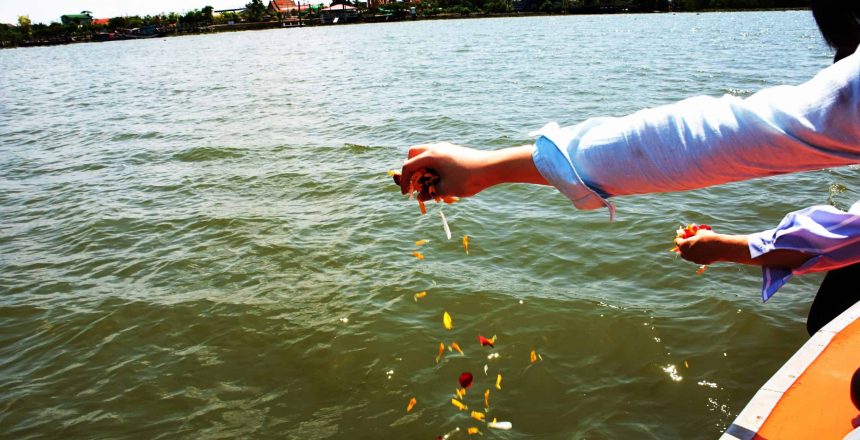
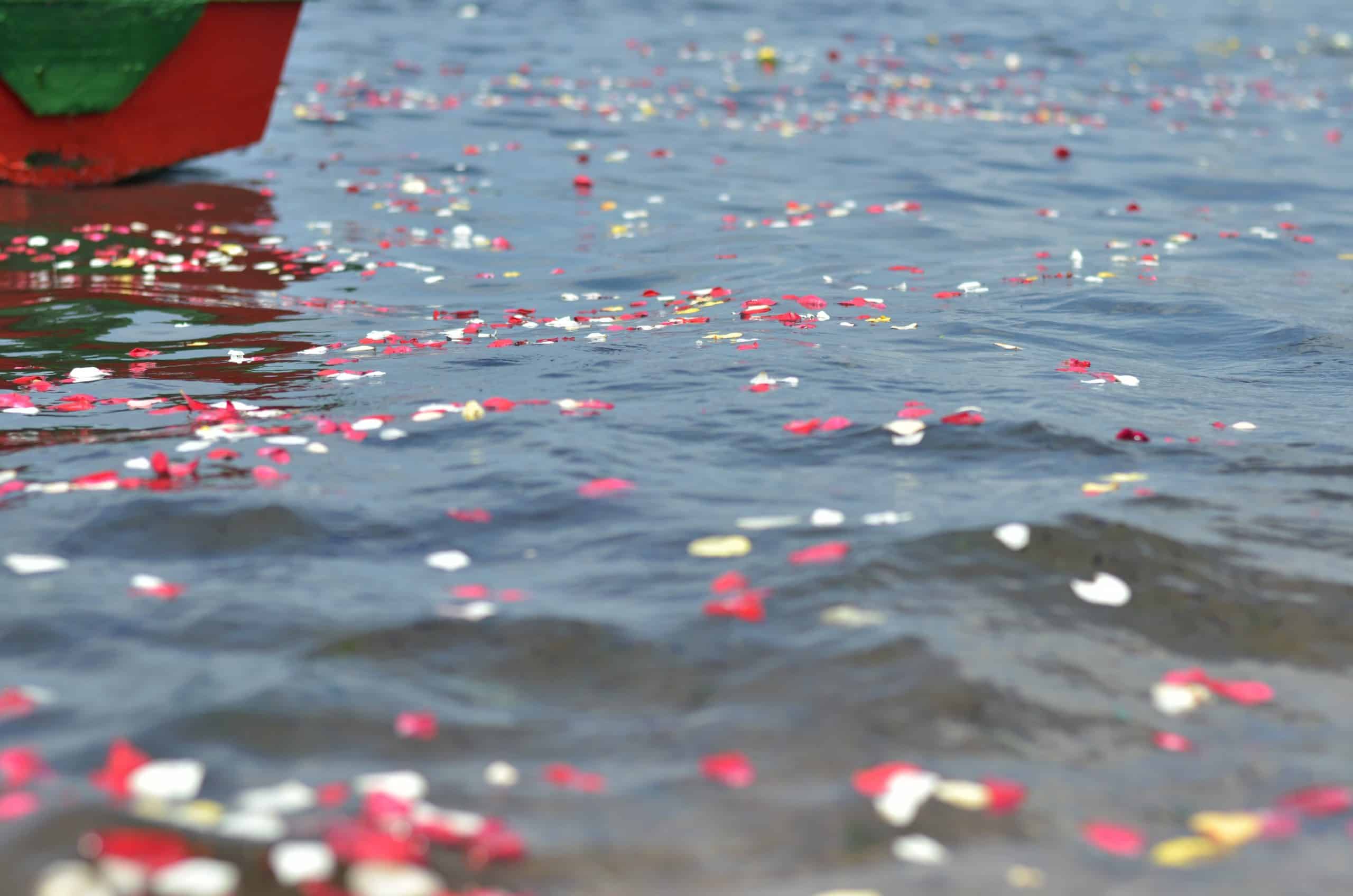
The ceremony itself is as personal as you want it to be. Families can choose music, themed décor aboard the Seaspray, seaflower ceremonies using biodegradable flowers scattered over the water, and catering for the journey. Pets are welcome aboard — a detail that matters enormously to families who can’t imagine leaving their dog behind on a day like this. If you cannot attend in person, we offer unattended services where our crew conducts the ceremony on your behalf, and you receive a memorial certificate with the GPS coordinates of where it took place.
After the ceremony, we handle the EPA notification. You don’t have to research the process or fill out forms while you’re grieving. That’s our job. Yours is to be present — or, if you can’t be, to trust that someone who does this with care is handling it for you.
To learn more or ask questions about what a service would look like for your family, you can reach our Burial Coordinator Maria Brusalis directly at 631-668-5800.
Finding the Right Option for Cremation Ashes — When You're Ready
There is no deadline, and there is no wrong answer as long as the choice is made with care. Whether you keep the remains at home for now, place them in a columbarium at a local cemetery, choose a living memorial, or bring your family to the water off Point Lookout for something that feels final and real — what matters is that the decision feels right for the person you’re honoring.
If you’re a Nassau County, NY family weighing your options, and especially if the ocean is calling you in some way you can’t quite explain, we’d be glad to talk it through. Eternal Peace Sea Burials exists for exactly this moment — not to sell you something, but to help you find the path forward that fits.